

VOICE OF THE WILD "WELLNESS GATHERING"
2-5 JULY
Join us for a unique gathering where music, sound, movement, art and connection come together in perfect harmony.
We invite you to slow down, open your heart, and reconnect with your true essence as we celebrate the wild spirit within. Surrounded by nature, this immersive experience is designed to nourish your body, awaken your creativity, and deepen your sense of connection.
Body & Movement
Flow, stretch, and energize your body through:
Hatha Yoga
Vinyasa Yoga
Power Pilates
Thai Stretch
Authentic Yoga Dance
Pranayama & Breathwork
Sound & Music
Let the vibrations guide you through transformative sound experiences:
Gong Bath
Sound Healing
Sound Meditation
Handpan Workshop
Sur-Fa Live Performance
Interactive Music Circle
Humanka Live Performance
Dj Sets
Creative & Ritual
Explore self-expression and ritual through:
Mask Design: Who Am I?
Incense Making
Tribal Marks Ritual Body Painting
Aromatherapy Candle Workshop
Experience
Connect, play, and celebrate together:
Jam Session
Yoga Playground
Connecting Circle
Frozen Image Exercise
Alemyst Ecstatic Dance Ceremony
Come as you are. Move, create, connect, and celebrate life with us.


weekly tunes
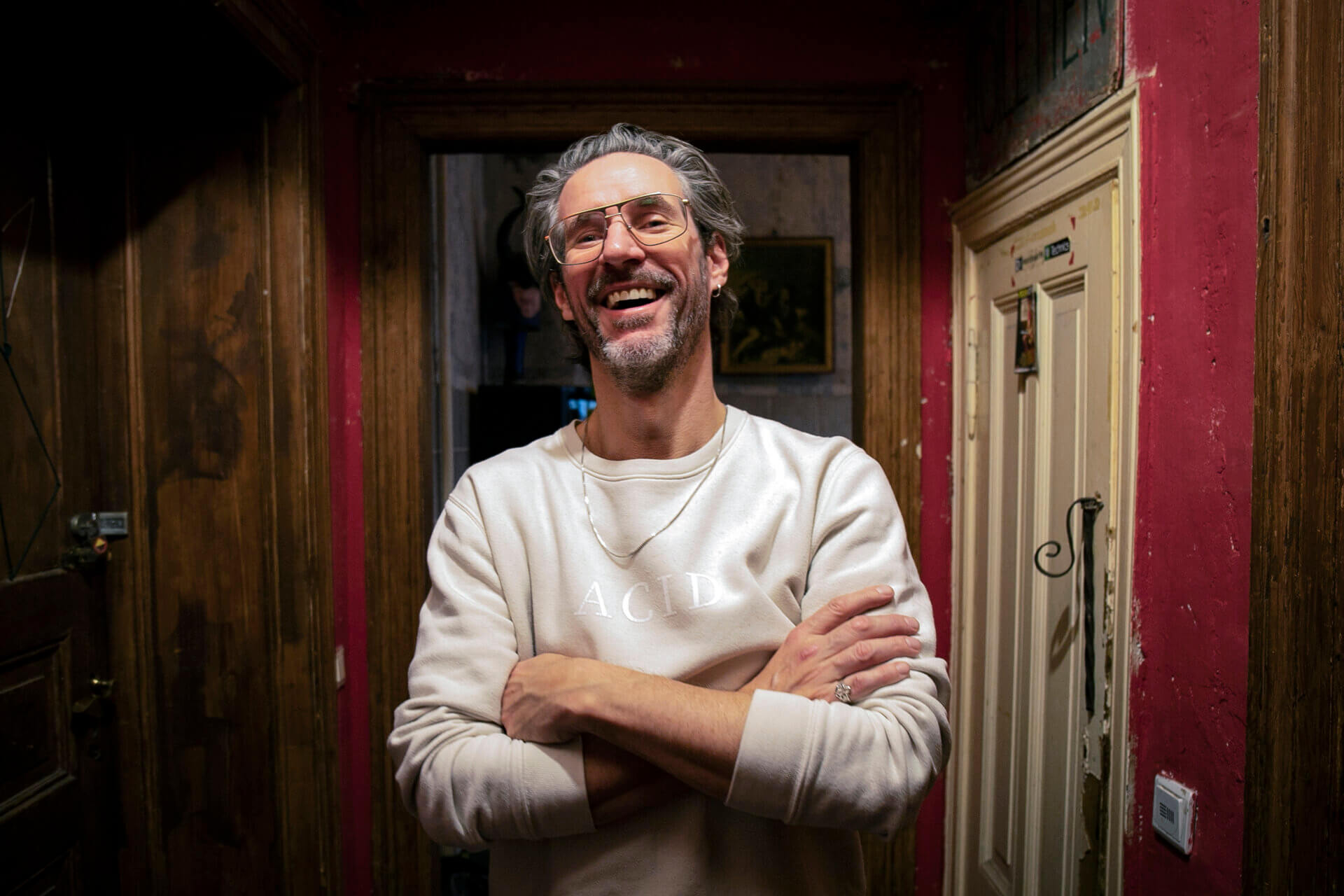
Madmotormiquel, born in West Berlin, grew up blending punk, hip-hop, and the emerging sounds of acid techno and drum & bass. After the fall of the Wall, he became part of the movement that turned abandoned factories into temples of electronic music, co-founding the iconic collective Bachstelzen. Today, his name is synonymous with Berlin’s underground house scene, sharing his warm, soulful sound on dance floors around the world.
We will have the chance to listen to him during Love Weekend - Sep 23-28
bonjuk recıpes
CRISPY FRIED CAULIFLOWER WITH CHILI JAM
Ingredients
1 large cauliflower, cut into small florets
Salt, for boiling water
1 cup cornmeal
1 tsp paprika
1 tsp garlic powder
1 tsp curry powder
½ tsp allspice
½ tsp black pepper
Vegetable oil, for frying
Fresh spring onions, finely sliced
Chili jam, for serving
Method
Step 1 – Prepare the Cauliflower
Cut the cauliflower into small, bite-sized florets. Bring a large pot of generously salted water to a boil and blanch the cauliflower until just tender.
Step 2 – Shock in Ice Water
Transfer the cauliflower immediately into a bowl of ice water. This stops the cooking process and helps the florets retain their texture. Drain well once cooled.
Step 3 – Prepare the Coating
In a large bowl, combine the cornmeal, paprika, garlic powder, curry powder, allspice, and black pepper.
Step 4 – Coat the Cauliflower
Add the drained cauliflower florets to the seasoned cornmeal mixture and toss until evenly coated.
Step 5 – Fry
Heat vegetable oil in a deep pan. Fry the coated cauliflower for about 2 minutes, or until golden brown and crispy.
Step 6 – Serve
Transfer to a serving plate and garnish with freshly sliced spring onions. Serve with chili jam on the side or drizzled over the top.
Bon Appetit!

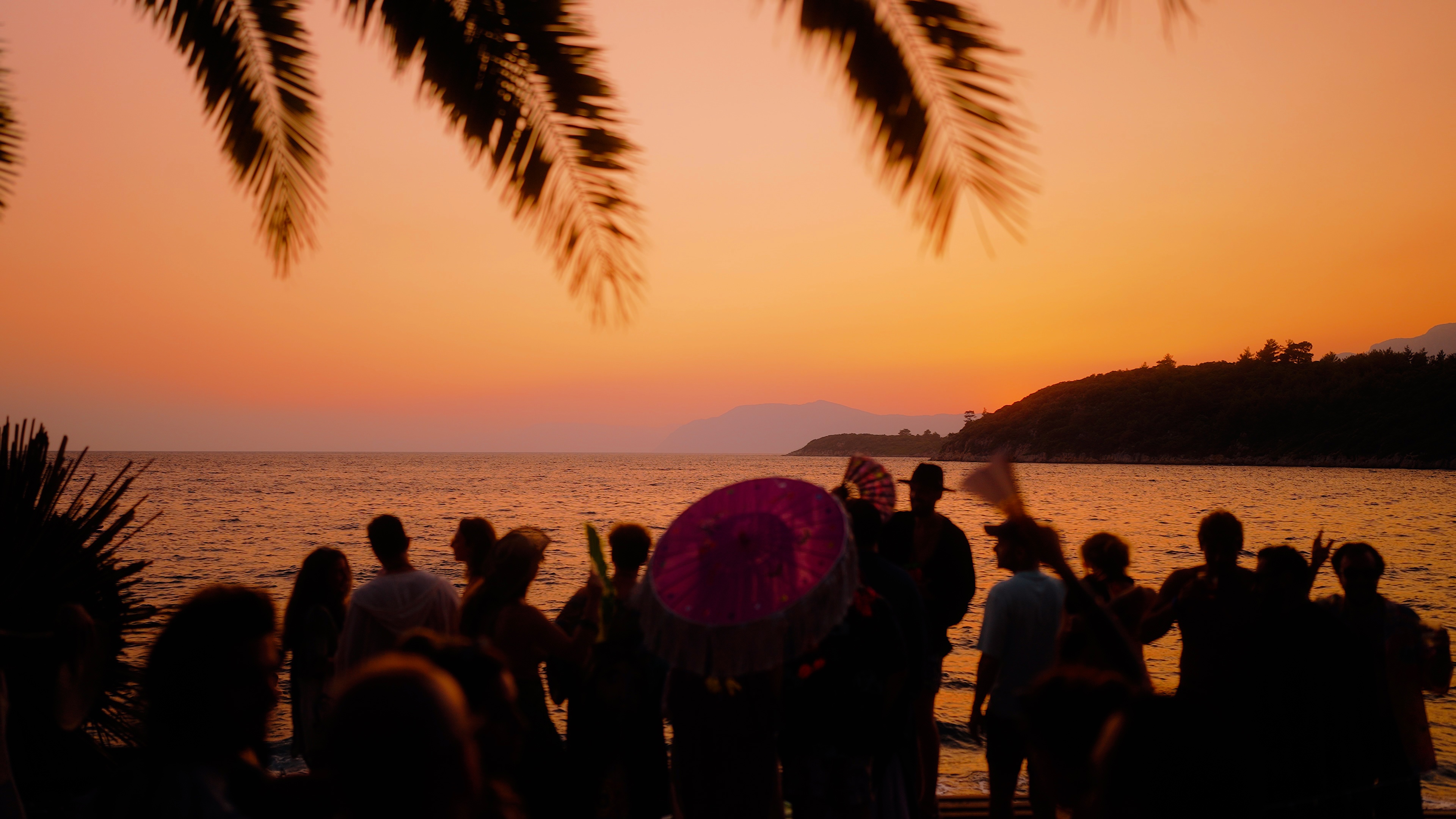
what calls us together at sunset?
WE GATHER FOR SUNSET ON THE BEACH TO SALUTE THE SUN AND CELEBRATE ANOTHER MAGICAL DAY
There is something curious about sunset. No matter where we come from, what language we speak, or what kind of day we have had, we instinctively turn toward it. We stop conversations mid-sentence. We put down our phones. We call friends over. We point at the horizon as if seeing it for the first time. It is one of the few events on Earth that still gathers people without requiring an invitation.
This isn't new. Humans have been organizing their lives around the sun for far longer than they have organized them around clocks. Ancient monuments across the world were aligned to its movements. Entire civilizations tracked its journey across the sky. Sailors navigated by it, farmers depended on it, and storytellers built myths around it. To our ancestors, the sun was not simply part of the landscape. It was the force that determined whether crops grew, whether journeys succeeded, whether life continued.
Perhaps this is why sunsets still feel significant. Somewhere deep within us remains an ancient instinct that recognizes the closing of a day. A sunset is more than a beautiful sky. It is a completion. A natural pause between what has happened and what comes next.
What is remarkable is that this daily event has never lost its power. We know exactly why the sky changes color. We understand the science behind the light. Yet every evening people still gather at beaches, rooftops, mountains, balconies, and fields to watch the same phenomenon their ancestors watched thousands of years ago.
Maybe what draws us is not the sunset itself, but the shared act of witnessing it. For a few minutes, everyone is looking in the same direction. Strangers stand side by side. Conversations soften. The horizon becomes a meeting point. Without planning it, a temporary community forms around a single moment.
In a world increasingly organized around speed, productivity, and distraction, sunsets remain wonderfully indifferent. They cannot be rushed, replayed, improved, or postponed. They simply arrive, ask us to pay attention, and leave.
And perhaps that is why we gather. Not to salute the sun as a distant star, but to acknowledge something much closer. Another day lived. Another chapter completed. Another collection of conversations, discoveries, mistakes, laughter, and memories carried gently into the night. For a brief moment, standing together at the edge of the sea, we remember that some of life's most meaningful rituals were never invented. They were simply noticed.
SHINRIN YOKU (FOREST BATHING)
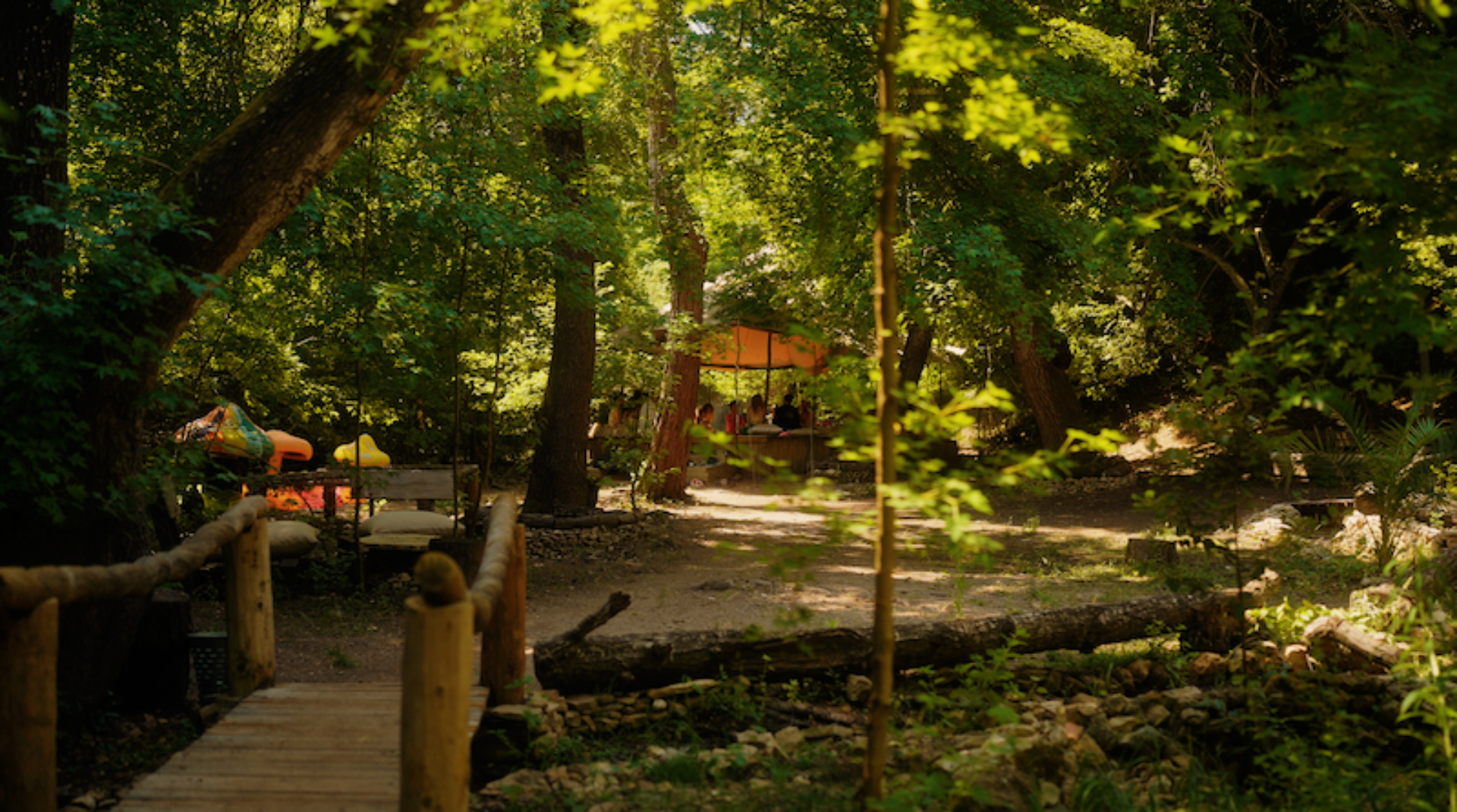
At Bonjuk Bay, many of these experiences exist naturally within the landscape itself.
One of them is something the Japanese call Shinrin-yoku, often translated as “forest bathing.” But despite the name, it has nothing to do with water. It simply means immersing yourself in the atmosphere of trees. Originally developed in Japan in the 1980s, it became widely studied for its effects on stress, nervous system regulation, sleep quality, and immune function. Research showed that spending time among trees can lower cortisol levels, reduce blood pressure, and increase the activity of natural killer cells immune cells that help the body defend itself.
One of the reasons behind this may be something called phytoncides: aromatic compounds released by trees and plants into the air. Trees use these compounds to protect and heal themselves from bacteria, insects, and environmental stress. When humans inhale them, studies suggest they can also influence our nervous and immune systems.
This is where Bonjuk Bay becomes a particularly unique place to experience it.
The bay is filled with naturally aromatic species: pine, bay laurel, wild herbs, and Oriental sweetgum. Especially in the heat of the Mediterranean sun, these trees release their oils into the air continuously. You are not only seeing nature here you are breathing its chemistry.
Frankincense itself carries an especially fascinating story. The resin comes from Oriental sweetgum trees, which release their fragrant gum when the bark is wounded. In other words, the tree heals itself through the same substance humans have burned, inhaled, and used ceremonially for thousands of years. Traditionally,Oriental sweetgum trees have been associated with anti-inflammatory and antimicrobial properties, and modern research continues exploring many of these effects.
Even the smell alone changes something in the body.
Scent bypasses analytical thinking and reaches directly into the nervous system, memory, and emotional regulation. This is partly why certain places stay with us long after we leave them.
And despite how ritualistic the term Shinrin-yoku sometimes sounds, you do not actually need a practitioner for it.
A guide can help deepen the experience through sensory exercises or slowing techniques, but at its core, forest bathing is simply an intentional presence with nature. Walking slowly without a destination. Sitting under trees without distraction. Paying attention to smell, texture, temperature, sound, light. In Japan, many researchers describe it less as an activity and more as a state of attention. Simple things. But sometimes the body responds most deeply to what feels most natural.

If you have a story, project, or idea you’d like to share, we’d love to hear from you and help spread the word. Feel free to reach out to us at This email address is being protected from spambots. You need JavaScript enabled to view it.