

25 may - 1 JUNE
“To the mad, every day is a holiday.”
There is a saying in Turkish: “To the mad, every day is a holiday.”
It is usually said jokingly. A way of describing someone who lives outside the rules, outside seriousness, outside what society calls “normal.”
But maybe there is another way to understand it.
Because what if madness is not always destruction?
Carl Jung often wrote about the archetype of The Fool, a figure who stands at the beginning of the journey. In many myths and symbolic systems, the hero does not begin as wise, composed, or certain. The first step is almost always irrational.
The Fool walks toward the unknown without guarantees.
Not because they are incapable of fear, but because something inside them values possibility more than safety.
The hero’s journey does not begin with mastery. It begins with the willingness to appear foolish enough to leave the map behind. To step outside the structures that once defined you. To risk being misunderstood in exchange for becoming something more alive.
In Jungian thought, this is not weakness. It is the beginning of transformation.
And maybe this is why the idea of sacrifice appears so often in human rituals and traditions. During Eid al-Adha, sacrifice is not only about giving something up externally. Symbolically, it asks a deeper question: what are we willing to surrender in order to live truthfully?
Because many people already make sacrifices every day.
They sacrifice their spontaneity for approval.
Their strangeness for acceptance.
Their dreams for stability.
Their real selves for the comfort of fitting in.
And perhaps this is the greater tragedy.
To never begin the journey at all.
To sacrifice the most alive parts of yourself before they ever have the chance to speak.
From this perspective, The Fool is not the foolish one.
The Fool at least moves. Risks. Leaps. Transforms.
Maybe the real madness is spending an entire life performing certainty while quietly abandoning who you are.
“Deliye hergün bayram.”
Maybe the saying was never an insult after all.
Join us in The Bayram Fest to celebrate like everyday is a holiday.
 for more information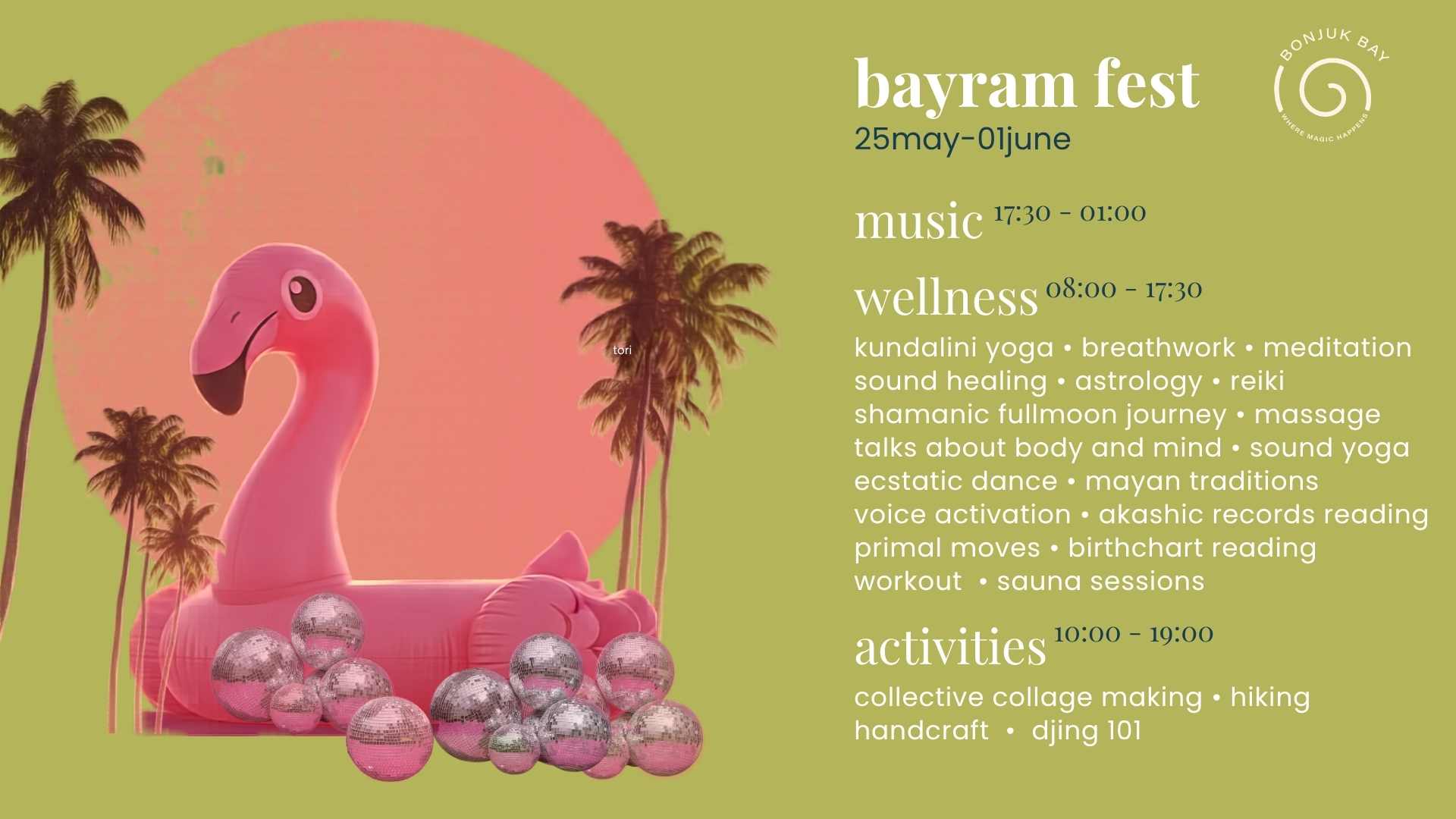
CONTRAST THERAPY
This season at Bonjuk Bay, we’re excited to invite you into one of the simplest yet most powerful rituals we know: the experience of moving between sauna and sea, heat and cold, and feeling the body fully awaken through contrast.
Contrast therapy alternating between heat and cold exposure has been practiced for centuries across many cultures. Today, it is commonly experienced through sauna sessions followed by cold plunges or swimming in the sea.
While the experience can feel intense at first, the effects on the body are surprisingly practical.
Heat exposure from the sauna causes blood vessels to dilate, increases circulation, raises heart rate, and helps muscles relax. Sweating also supports the body’s natural cooling and recovery processes.
Cold exposure does the opposite. Entering cold water causes blood vessels to constrict, activates the nervous system, reduces inflammation, and increases alertness. Many people also notice improved mood and mental clarity after cold exposure due to the release of adrenaline and endorphins.
Moving between these two states creates what is known as contrast therapy.
This rapid shift between expansion and contraction stimulates circulation and encourages the body to adapt more efficiently to stress. Research also suggests that regular sauna use may support cardiovascular health, improve sleep quality, reduce muscle soreness, and help regulate stress responses.
But one of the most immediate effects is attention.
Cold water demands presence.
Breathing changes instantly. The mind stops wandering because the body shifts into immediate awareness. Combined with the deep relaxation created by heat, the contrast can leave people feeling both calmer and more awake afterward.
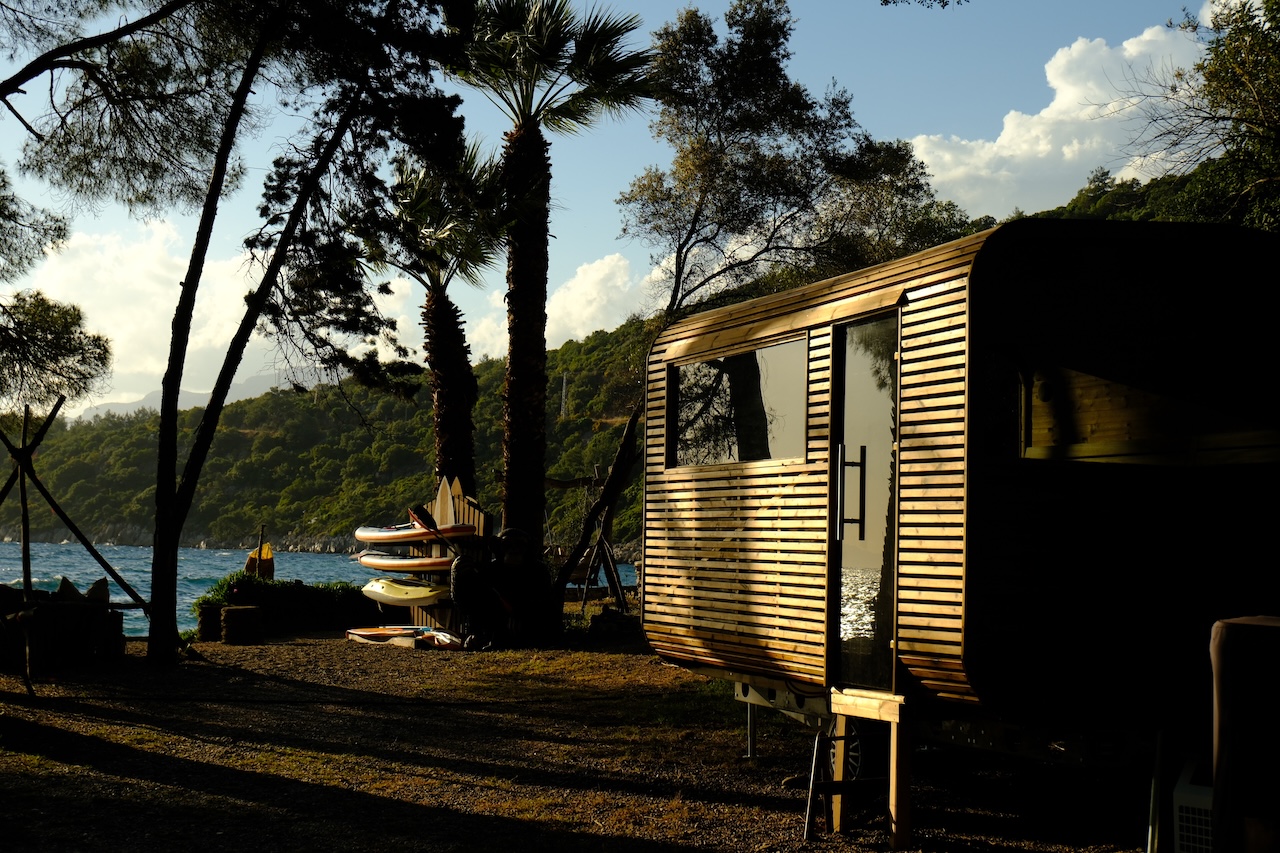
At Bonjuk Bay, this experience happens naturally between the sauna and the sea.
The body heats up slowly inside the sauna, muscles soften, the nervous system relaxes. Then comes the transition into cold water sudden, sharp, refreshing. After a few moments, the body begins adapting, breathing steadies, and energy levels often rise noticeably.
The experience is simple, but the effect is powerful.
Not because it is extreme, but because it reminds the body how to respond, regulate, recover, and feel.
weekly tunes
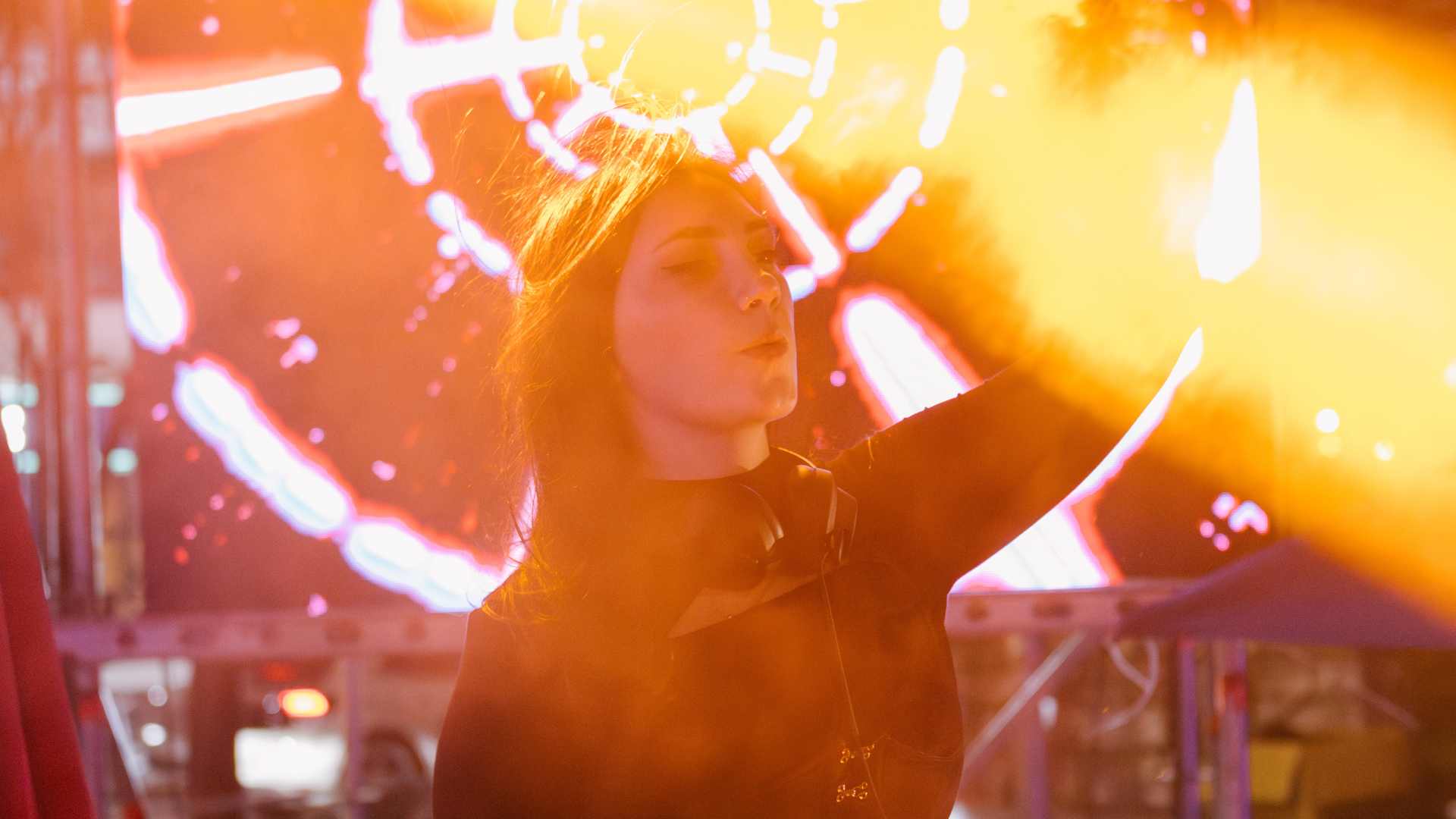
Rea Lemnusha is a one of the bright representatives of the flourishing Albanian electronic music scene. During her DJ sets, she always aims to create a hypnotic and powerful feeling that people can’t help but dance to. Her passion is driven by connecting her culture and roots with music. To Rea, electronic music is the universal language that connects people from different backgrounds.
We will have the chance to listen to her at Bayram Fest.
bonjuk recıpes
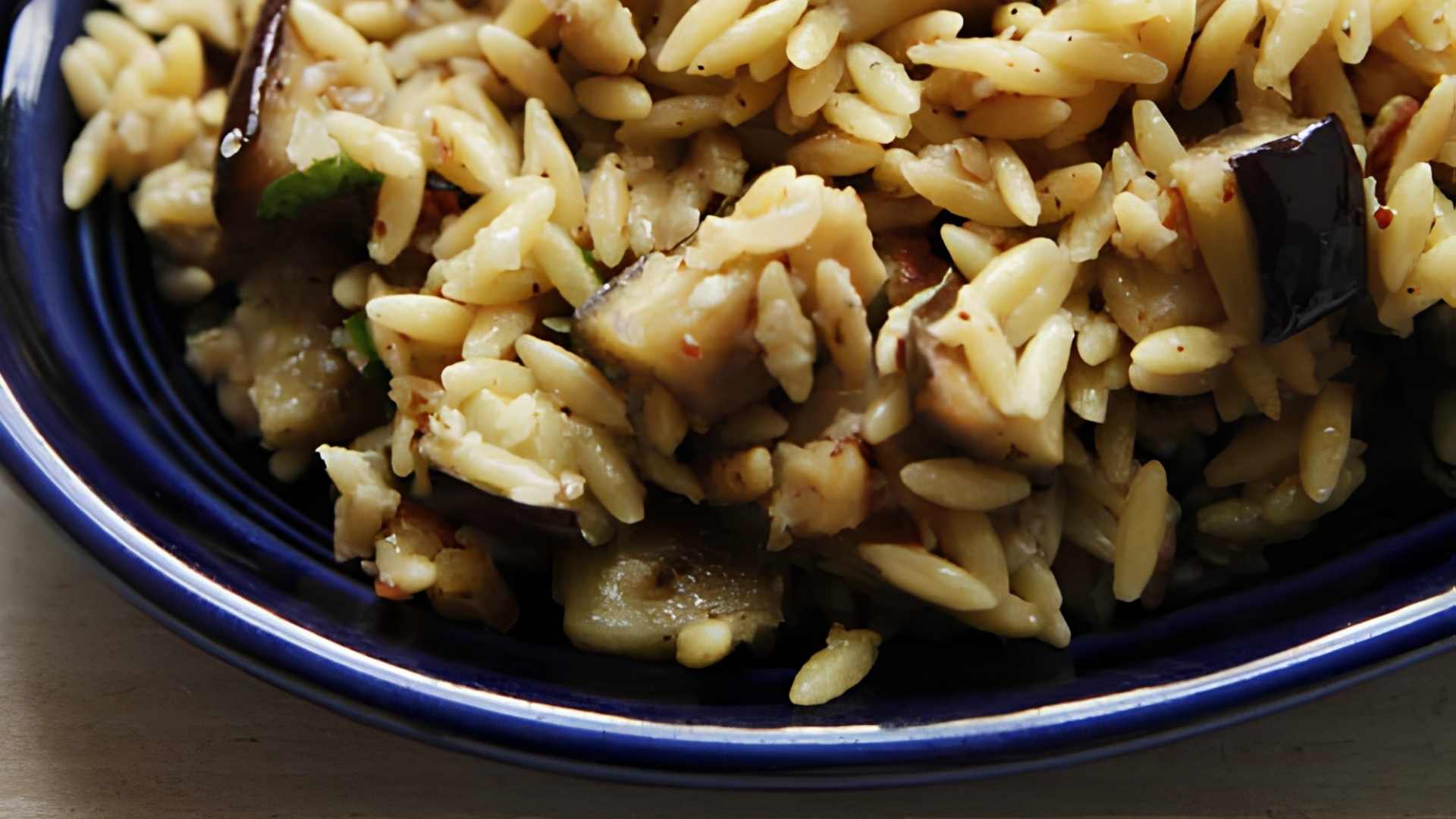
EGGPLANT ORZO
Ingredients
3 onions
2 cups orzo pasta (arpa şehriye)
2 eggplants
3 garlic cloves
2 cups water
Ground cumin, to taste
Black pepper, to taste
Salt, to taste
Olive oil or vegetable oil, for cooking and frying
Step 1
Dice the onions into small cubes and sauté them in oil over medium heat until soft and deeply caramelized.
Step 2
Peel the eggplants in alternating strips (pajama style), then cut them into cubes. Soak them in salted water for a while to remove their bitterness. Drain well, then fry in hot oil until golden and tender. Set aside.
Step 3
Add the orzo to the caramelized onions and stir continuously until the pasta turns a rich golden brown.
Step 4
Season with cumin, black pepper, and salt. Add the crushed garlic cloves and stir for another minute until fragrant.
Step 5
Gradually add the water while continuously stirring, allowing the orzo to absorb the liquid slowly and evenly as it cooks.
Step 6
Just before all the liquid is absorbed, fold in the fried eggplants gently.
Step 7
Cover the pot with a lid lined with a clean kitchen towel and let the pilaf rest on low heat until the remaining moisture is absorbed completely.
Bon Appetit!
what land holds
The Çamlı – Bozburun Peninsula line, where Bonjuk Bay is located, is considered one of the most geologically unique regions of Southwest Anatolia. Beneath the olive trees, the sea salt, and the softness of the coastline lies a much older story, one written in minerals, pressure, heat, and time.
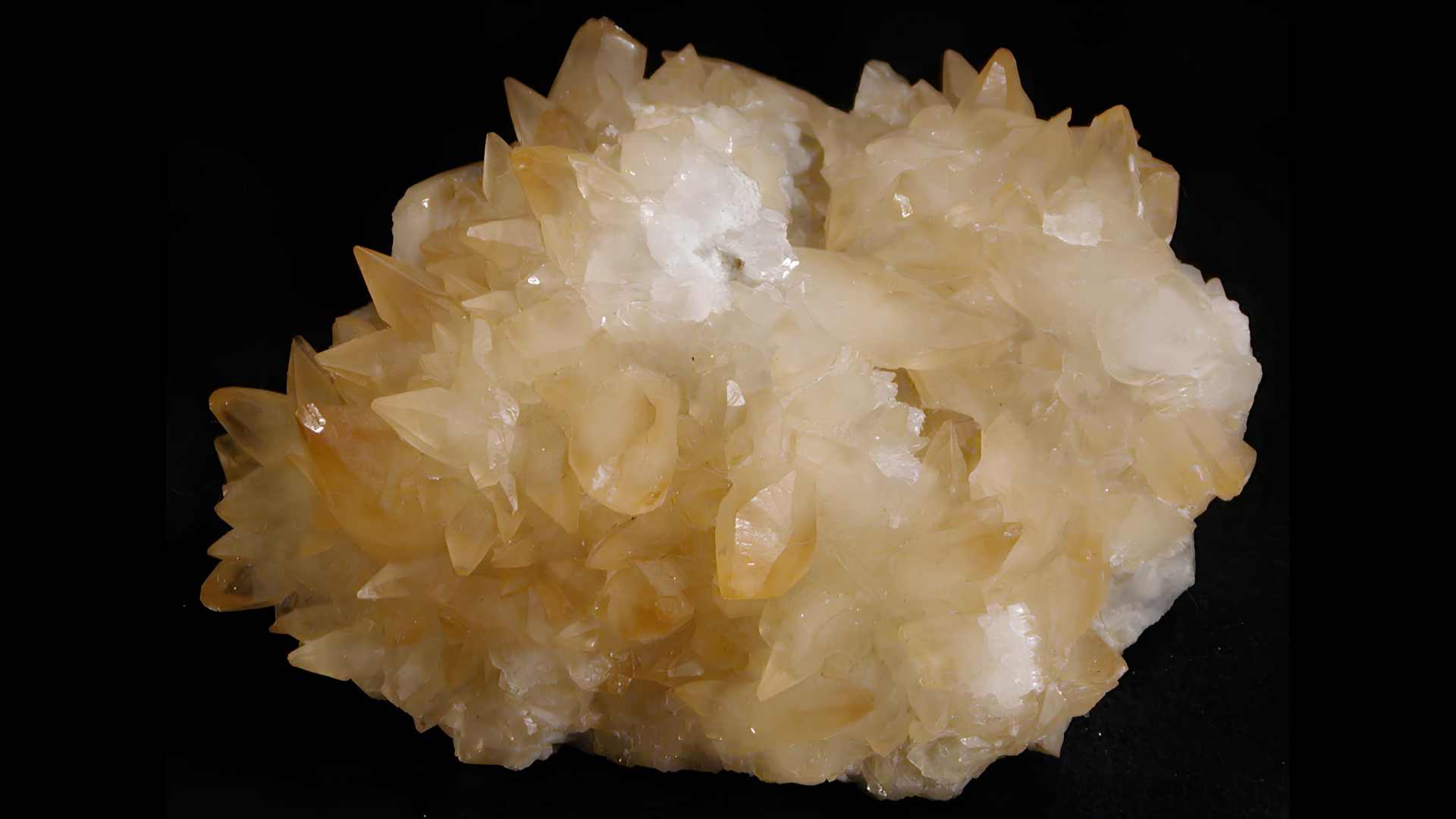
For millions of years, tectonic movements and hydrothermal activity shaped the land beneath this peninsula, creating veins of quartz, calcite, jasper, chalcedony, and iron-rich metamorphic stones. Even today, while walking along the shore or through the hills, small orange, pink, and translucent crystals appear unexpectedly between the rocks, as if the earth itself is slowly surfacing through the landscape.
Among these minerals, quartz remains one of the most fascinating. Scientifically, quartz possesses a property called piezoelectricity, meaning it can generate electrical charge under pressure and carry vibrations with extraordinary stability. Long before the modern world became dependent on it, quartz was already quietly regulating frequencies inside the earth itself. Today, the same mineral is still used in watches, radios, computers, and communication systems because of its remarkable relationship with resonance and precision.
It is perhaps no surprise that Nikola Tesla became deeply fascinated by frequency, vibration, and resonance throughout his work. The same principles that made quartz essential to modern electronics were closely related to the systems Tesla spent his life exploring. Somewhere between science and symbolism, quartz became both a technological tool and a cultural metaphor for invisible energy.
The other minerals found throughout the region carry their own distinct character. Calcite is known for the way it catches and amplifies light, often associated with clarity and movement. Jasper and chalcedony, shaped by iron and earth-rich compositions, have historically been connected to grounding, endurance, and physical presence. Even the warm orange tones created by oxidized iron seem to mirror something instinctively human: warmth, vitality, aliveness.
Over centuries, people began assigning emotional qualities to stones not only because of mysticism, but because of repeated human experience with them. Pink-toned minerals became associated with softness, openness, and the heart. Orange and reddish stones with movement, creativity, and life force. Whether symbolic, psychological, or energetic, these associations became part of humanity’s ancient dialogue with the earth.
Perhaps this is why so many people describe arriving at Bonjuk as feeling less like entering a place and more like tuning into a frequency already waiting for them. Something slows down. Something sharpens. Something softens.
Part of this may be the sea, the silence, the rhythm of nature. But part of it may also belong to the land itself. Because minerals are not simply decorative fragments beneath our feet. They shape light, hold heat, conduct vibration, and quietly influence the atmosphere around them. And so, that feeling many describe upon arriving “I felt something shift in me the moment I stepped here” may not be only poetic imagination, but a real sensation emerging from the meeting point between geology, energy, memory, and the human body.
If you have a story, project, or idea you’d like to share, we’d love to hear from you and help spread the word. Feel free to reach out to us at This email address is being protected from spambots. You need JavaScript enabled to view it.